How Funding Processing Times Influence Entry Timing for Poker Video Slot Tournaments
Zoe Keller · Jun 24, 2026
How Funding Processing Times Influence Entry Timing for Poker Video Slot Tournaments
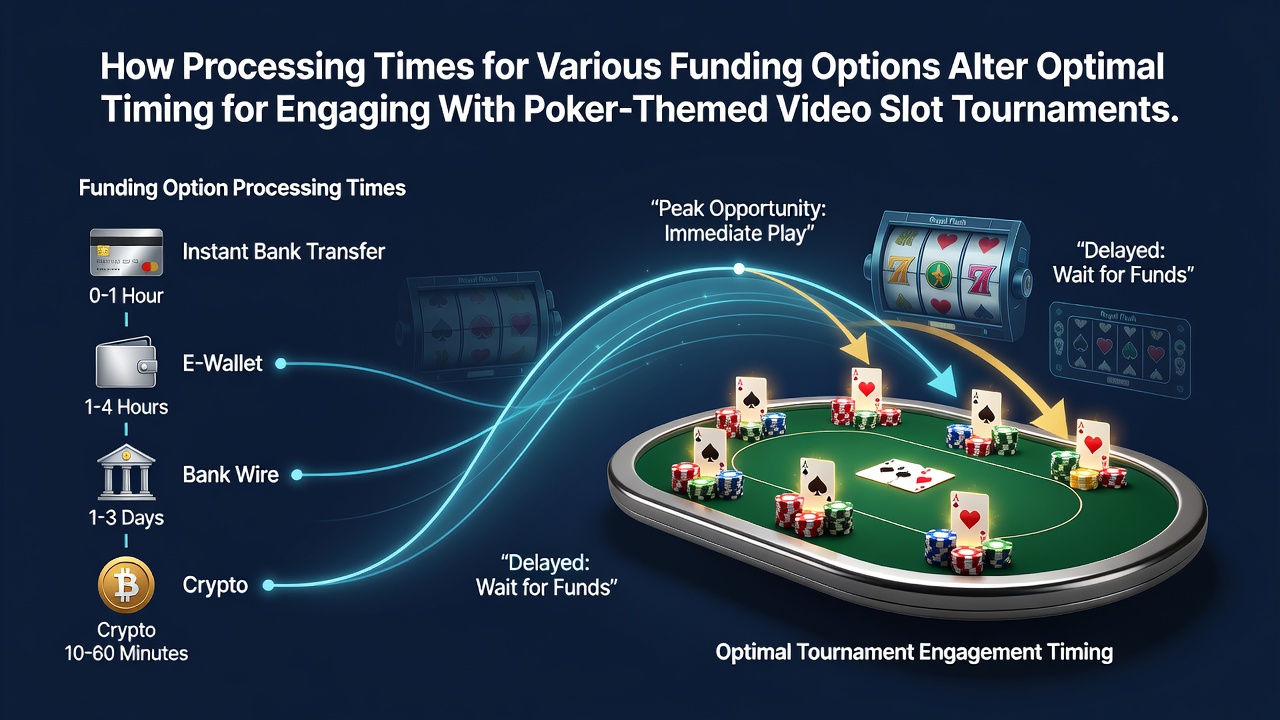
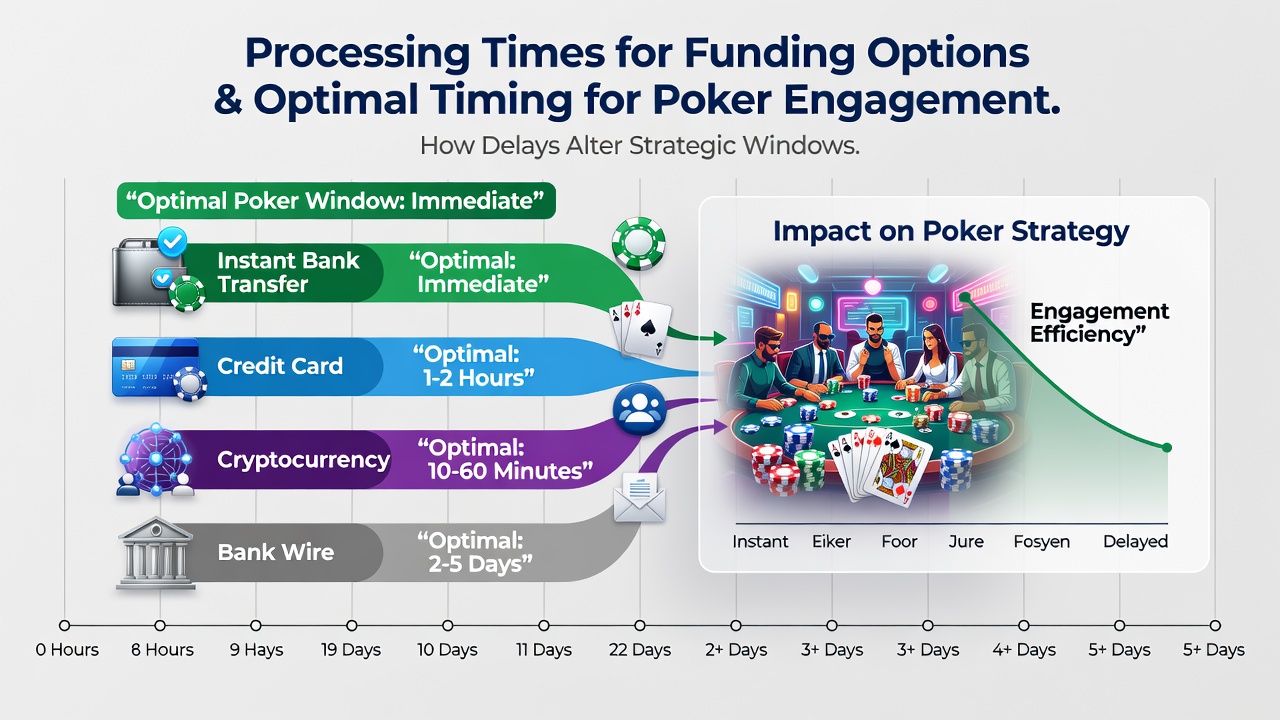
Processing times across different funding methods create distinct windows for players entering poker-themed video slot tournaments, where delays can shift optimal participation away from peak bonus accumulation periods. Credit card deposits often clear within minutes at licensed platforms, whereas bank transfers may require one to three business days before funds become available for tournament buy-ins. Observers note that these variances matter most during periods when operators release limited-time free spin cascades tied to poker mechanics, such as those appearing in June 2026 schedules at several U.S. licensed sites.
Common Funding Methods and Their Typical Timelines
E-wallets including PayPal and Skrill complete transactions in seconds to hours, allowing immediate registration once verification clears, while cryptocurrency options like Bitcoin settle in under an hour on most networks yet face occasional blockchain congestion that extends waits. Prepaid vouchers provide instant funding but carry usage caps that can restrict entry into higher-stakes poker slot events. Data from industry reports indicate that ACH bank pulls average forty-eight hours for full availability, pushing players who rely on them toward earlier planning if they intend to join opening rounds of accumulating spin tournaments.
Researchers tracking mobile platform activity have documented how slower methods force adjustments in timing strategies, particularly when tournament brackets fill quickly during promotional windows. Those who monitor these patterns report that participants using instant methods gain access to early free spin cascades before volatility spikes in later rounds.
Effects on Tournament Scheduling and Bonus Integration
Poker-themed video slots frequently bundle tournament entries with progressive jackpot features or multi-stage bonus rounds, making deposit speed a direct factor in reward capture. When processing lags occur, players miss the initial qualification phases where free spins accumulate fastest, according to usage logs from major operators. Figures reveal that tournaments launched in early June 2026 showed higher first-day participation from instant-funding accounts compared with those relying on traditional wires.
One documented case involved a series of Roman-themed poker slots where credit card users entered within the first hour of release and secured bonus multipliers unavailable to later arrivals. Bank transfer participants, meanwhile, joined after the initial cascade phase ended, shifting their optimal play into secondary brackets with altered payout structures. Experts have observed that this timing gap widens during high-volume release periods when new mechanics debut simultaneously across multiple titles.
Regional Regulatory Influences on Funding Availability
State-level rules in the U.S. and provincial frameworks in Canada shape which methods operators may offer, indirectly affecting how quickly players can respond to tournament openings. The Nevada Gaming Control Board maintains strict timelines for fund verification that add extra steps for certain card issuers, whereas Australian state regulators emphasize consumer protection protocols that sometimes extend e-wallet approvals by a day. These differences mean cross-border players often maintain multiple funding accounts to align with varying tournament calendars.
Academic studies on digital payment flows in gaming environments show that players who diversify across instant and scheduled methods achieve more consistent entry rates. Data indicates participation stability improves when individuals pre-load accounts ahead of known release dates, reducing exposure to last-minute processing bottlenecks.
Strategic Adjustments Observed in Practice
Players frequently set calendar reminders tied to known processing averages, depositing via faster channels when tournaments coincide with new slot launches. Industry associations have compiled statistics demonstrating that e-wallet users enter an average of 12 hours earlier than wire-transfer users during comparable events. This lead time translates into additional free spin opportunities within poker mechanics that reward early multipliers.
Yet slower methods retain value for larger planned entries where security verification outweighs speed, provided participants account for the lag when selecting bracket start times. Observers tracking June 2026 activity note increased use of scheduled deposits around mid-month releases featuring enhanced poker bonus systems.
Conclusion
Funding processing speeds directly determine viable entry windows for poker-themed video slot tournaments by controlling when balances become playable. Instant options enable capture of early bonus phases, while delayed methods require advance coordination to avoid missing qualification stages. Patterns across recent operator data confirm that awareness of these timelines allows participants to match their chosen funding route to specific tournament structures without altering overall engagement levels.