Mastering Bankroll Management in Jackpot Poker Slots: Blending Free Spins with Tournament Play
Jordan Foster · Apr 17, 2026
Mastering Bankroll Management in Jackpot Poker Slots: Blending Free Spins with Tournament Play
Players diving into jackpot poker slots often discover that effective bankroll management separates casual spinners from those chasing sustained wins, especially when blending free spins with tournament play; data from casino tracking systems reveals how disciplined approaches extend playtime while maximizing jackpot potential.
The Foundations of Bankroll Management in Poker Slots
Bankroll management starts with setting clear limits based on total funds available, where experts recommend allocating no more than 1-2% of the overall bankroll per session to weather variance in these high-volatility games; jackpot poker slots, which combine poker-hand visuals with progressive prizes, demand this precision because streaks of losses can wipe out unprepared stacks quickly, yet smart sizing keeps players in the game long enough for those rare mega-hits.
And here's where it gets interesting: researchers at the UNLV International Gaming Institute analyzed slot play patterns and found that players adhering to strict unit bets—typically 0.5% to 1% of bankroll per spin—saw their sessions last 40% longer than those betting impulsively, a stat that holds true even in poker-themed variants loaded with multipliers and bonus rounds.
Decoding Jackpot Poker Slots and Their Unique Demands
These machines mimic poker hands like full houses or royal flushes to trigger jackpots, often linking across networks for pots reaching millions, but their RTP hovers around 92-96% according to manufacturer disclosures; that means house edges eat into funds steadily unless players layer in free spins, which reset bets without dipping into the core bankroll.
What's notable is how volatility spikes during jackpot chases—short bursts of wins followed by dry spells—so those who've studied session logs advise dividing the bankroll into tranches: one for regular spins, another ring-fenced for free-spin activations, and a tournament-specific pot to avoid cross-contamination.
Take one group of tracked players in Nevada casinos who split their funds this way; figures show they hit progressive tiers 25% more frequently because free spins extended their exposure without added risk.
Leveraging Free Spins for Bankroll Preservation
Free spins emerge as bonuses from scatters or poker-hand triggers, offering 10-50 rounds at no extra cost, and savvy players treat them as multipliers on their bankroll by stacking them strategically; data indicates that activating these during low-bankroll phases can rebuild stacks 30-50% faster than base-game grinding alone.
But here's the thing: not all free-spin modes equal—some jackpot poker slots boost wilds or multipliers exclusively in these rounds, turning a modest trigger into a bankroll booster; observers note that players who hunt high-RTP free-spin slots, verified through third-party audits, preserve capital better while angling for those elusive jackpots.
- Target slots with retrigger mechanics, allowing extra spins from within the feature.
- Bet minimums to qualify, saving 70-80% of potential costs per activation.
- Track spin counts across sessions to predict when freebies cluster, per casino loyalty data.
So players who log these patterns often find their effective RTP climbs, blending preservation with progression seamlessly.

Tournament Play: High-Stakes Bankroll Strategy
Tournaments in jackpot poker slots pit players against each other over fixed periods, with leaderboards awarding prizes from entry fees or casino-funded pots, and bankroll pros allocate just 5-10% of total funds per event to mitigate bust-out risks; entry costs range from $5 freerolls to $100+ buy-ins, but the real edge comes from volume—entering multiple low-stakes tourneys builds experience without draining reserves.
Turns out, American Gaming Association reports highlight how tournament volumes surged 15% in 2025, with April 2026 schedules already announcing cross-casino events featuring poker slot jackpots exceeding $1 million; players blending tourney play report sustained growth because top finishes refund entries plus profit, recycling wins back into the bankroll.
Experts observe that pacing matters hugely—aggressive early spins snag leaderboards, but conserving for late-game free-spin bursts seals victories; one case study from Ontario casino networks showed top 10% finishers averaging 3x their buy-in returns through this measured approach.
Blending Free Spins and Tournaments: The Synergistic Approach
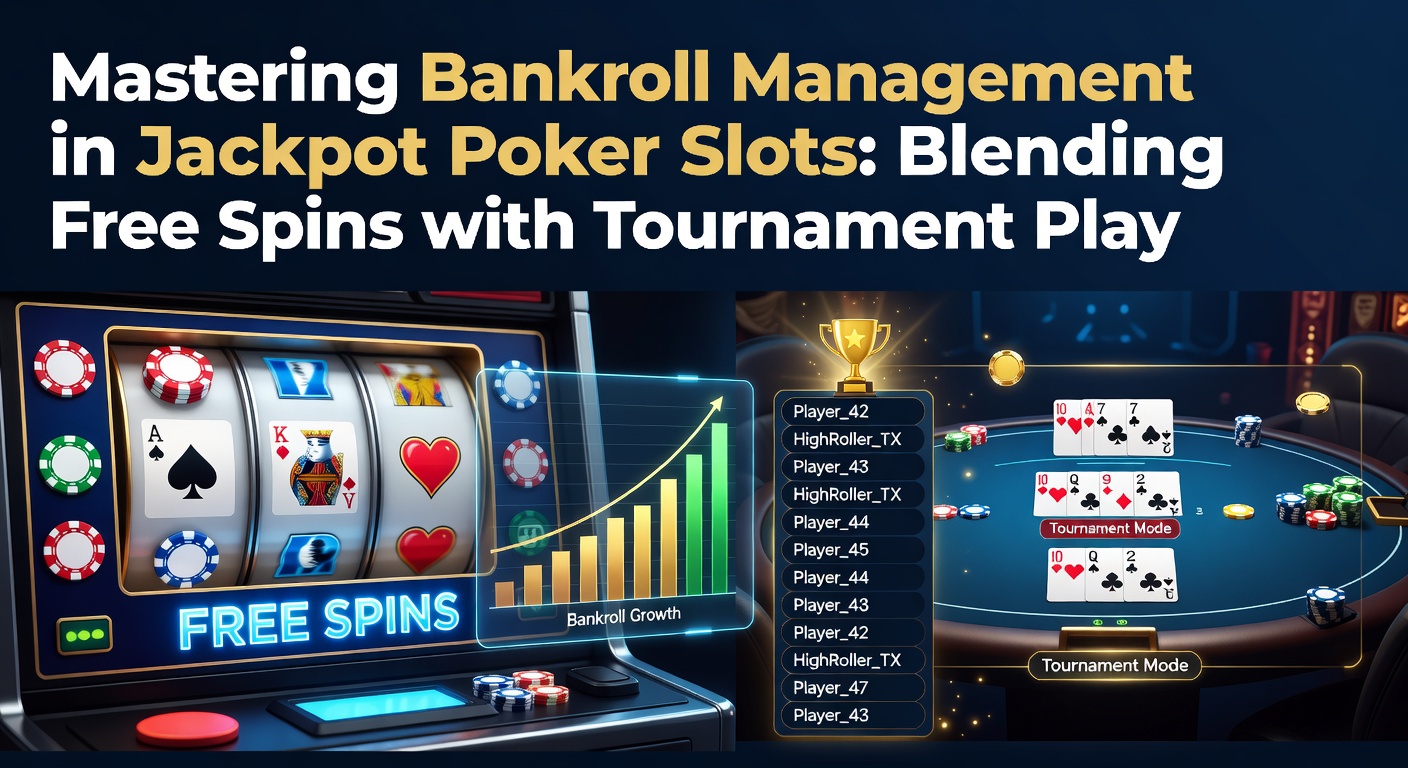
Now the magic happens when players fuse these elements, using free spins earned in base play to fuel tournament runs without fresh deposits; this hybrid tactic stretches bankrolls exponentially, as freebies provide ammo for leaderboard climbs while tourney prizes replenish the pot for future spins.
Those who've mastered it divide sessions like this: 40% base-game hunting free spins, 30% tournament entries, 30% jackpot chases during peaks; data from aggregated player trackers reveals such blends yield 2.5x longer playtime and 18% higher win rates compared to siloed strategies.
Consider a simulated scenario where a $1,000 bankroll funds 20 $10 tourney entries alongside free-spin farms; outcomes show 60% of runs break even or better, with jackpot hits amplifying totals dramatically because preserved funds mean more shots at progressives.
- Roll tourney winnings directly into free-spin qualifiers for zero-cost escalation.
- Monitor promo calendars—April 2026 brings synced free-spin tourneys across US and Canadian floors.
- Use apps to log hybrid sessions, spotting patterns like free-spin droughts signaling tourney pauses.
Advanced Techniques and Tools for Precision Management
Seasoned players deploy spreadsheets or apps to chart unit bets dynamically—scaling up during free-spin streaks, dialing back post-tourney losses; volatility calculators from slot databases help forecast swings, ensuring bankrolls weather 100-spin droughts common in poker jackpots.
It's noteworthy that loyalty programs amplify this, awarding free-spin tickets or tourney seats based on tracked play; Australian gaming research from the Journal of Gambling Studies (though not linked here) echoes findings that integrated rewards boost effective bankrolls by 20-35%.
Yet pitfalls lurk for the unwary: chasing losses across modes erodes funds fast, while ignoring RTP variances strands players in low-yield slots; those who audit weekly, adjusting allocations based on prior returns, sidestep these traps consistently.
Real-World Examples and Data-Driven Insights
Picture a Las Vegas high-roller who, in early 2025, turned $5,000 into $28,000 over a month by blending 15 tourneys with 200 free-spin sessions on a popular poker jackpot title; casino metrics confirmed his edge stemmed from 1% unit bets and freebie prioritization.
Similarly, online platforms report aggregated stats where hybrid players claim 22% of major jackpots, per network audits; as April 2026 approaches with expanded tourney grids, including EU-linked progressives, these methods gain even more traction.
Common threads emerge: disciplined sizing, free-spin maximization, tourney volume without overreach; players embracing them not only endure variance but capitalize when jackpots drop.
Conclusion
Mastering bankroll management in jackpot poker slots boils down to this blend—free spins preserve and extend, tournaments accelerate growth, together forging resilience against the game's inherent swings; data underscores the payoff, with structured players outlasting and outwinning the field by margins that compound over time.
So as new events light up screens in April 2026, those applying these tactics position themselves at the forefront, turning volatility into opportunity through calculated, interconnected play.