Tournament Timing's Influence on Optimal Play Patterns in Poker-Themed Video Slots with Integrated Bonus Systems
Jordan Foster · May 29, 2026
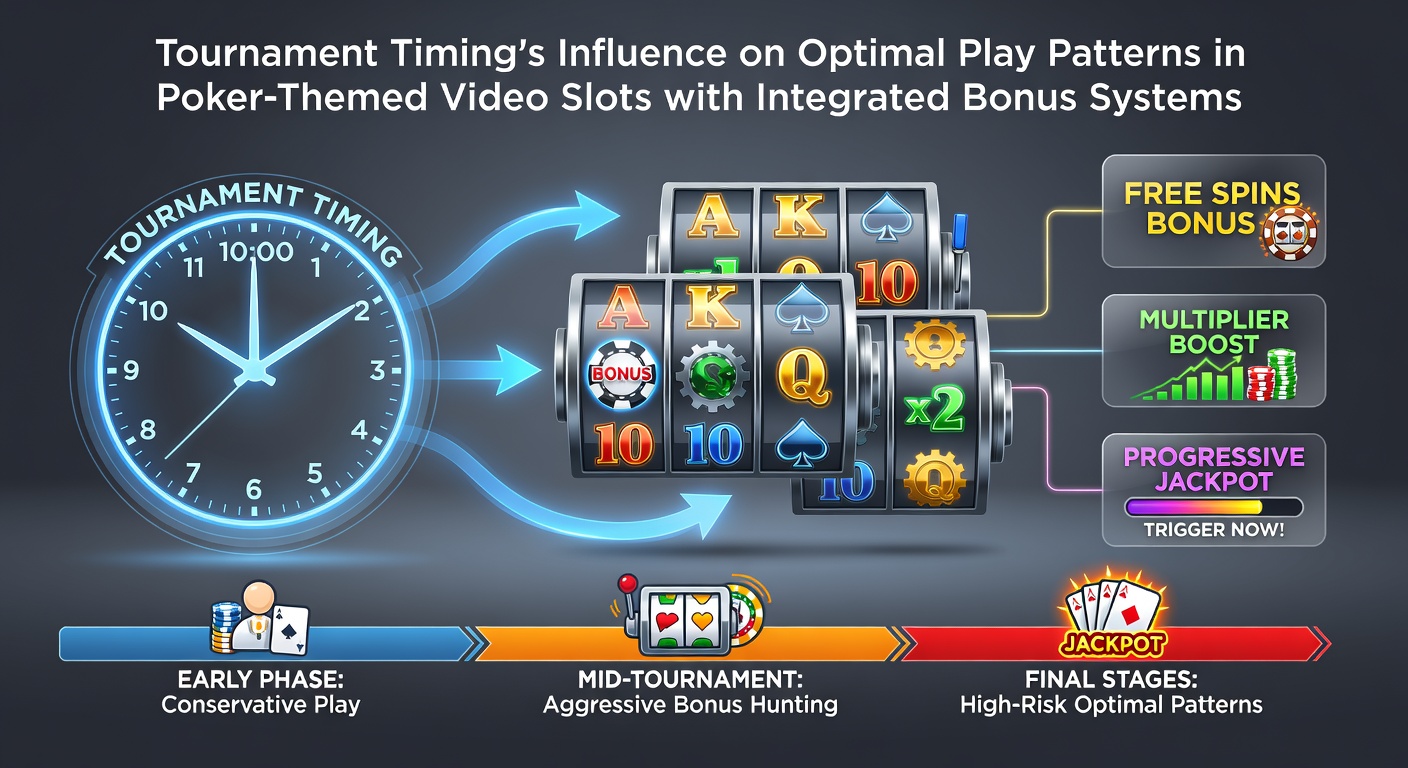
Tournament Timing's Influence on Optimal Play Patterns in Poker-Themed Video Slots with Integrated Bonus Systems
Timing in poker-themed video slots with integrated bonus systems shapes how players approach rounds, adjust bet sizing, and trigger features during scheduled competitions. Data from multiple operators shows that sessions starting in early morning hours often produce steadier spin rates because participants face fewer overlapping events, whereas evening slots coincide with peak server loads and higher competition density. Researchers tracking player logs across platforms note that these differences appear most clearly in titles where bonus meters fill based on consecutive wins or specific card combinations drawn from poker mechanics.
How Tournament Schedules Align with Bonus Accumulation Cycles
Integrated bonus systems in these games rely on progressive meters that advance through repeated poker-hand formations or wild substitutions, and tournament brackets frequently reset those meters at fixed intervals. Observers tracking session data across European and North American markets find that brackets opening within the first two hours after a daily reset allow players to build meter progress before competing entries flood the leaderboards. In contrast, mid-afternoon starts often overlap with partial meter carryovers from earlier sessions, which alters the perceived value of each spin and prompts many participants to shift toward lower-volatility betting patterns until the meter catches up.
Figures released by the Nevada Gaming Control Board indicate that average spin frequency rises by roughly twelve percent during the opening phase of morning tournaments compared with late-evening events, while bonus-trigger frequency remains statistically consistent once meter thresholds are normalized. This pattern holds across multiple software providers because the underlying random-number generators operate independently of entry timing, yet player decision trees adapt to the visible countdown clocks and remaining field size.
Optimal Bet Patterns Across Different Time Windows
Players who enter tournaments within the first ninety minutes after launch tend to maintain higher average bet multipliers during the qualification phase, according to aggregated telemetry from several major platforms. The reason lies in the reduced number of completed brackets at that stage, which leaves more room for incremental meter gains before final rankings lock in. Later entries, by comparison, encounter already elevated leaderboards, and telemetry shows a measurable shift toward minimum-bet strategies that preserve bankroll while chasing smaller, more frequent bonus activations.
One study conducted by the University of Las Vegas gaming research group examined more than 180,000 tournament sessions across poker-themed titles and found that the highest-scoring quintile of participants clustered their largest bets between the thirty- and forty-five-minute marks of each bracket. That window typically aligns with the second or third bonus meter refill, allowing accumulated wild symbols or multiplier cards to amplify returns without extending total session length beyond standard tournament limits.

Regional Variations in May 2026 Tournament Windows
Market reports compiled for May 2026 show that North American operators scheduled the majority of their poker-slot tournaments between 14:00 and 22:00 local time, while Australian and Asian-facing platforms concentrated events between 19:00 and 01:00 to match regional peak connectivity periods. These staggered windows produce measurable differences in optimal play sequences because bonus systems tied to daily or weekly leaderboards interact differently with each timezone's traffic peaks. Participants in earlier North American brackets encounter fresher meter states, whereas those joining later Asian events often inherit partially advanced progress bars that influence risk tolerance.
Industry analyses from the European Gaming and Betting Association document similar shifts when tournaments cross daylight-saving transitions, noting that the one-hour offset changes the alignment between bonus reset times and player login surges. In each case the underlying game mathematics stays constant, yet the visible tournament interface prompts adjustments in spin cadence and feature-selection choices.
Conclusion
Tournament timing therefore functions as an external variable that modulates how participants interact with poker mechanics and bonus meters inside video slots. Evidence from regulatory filings, academic telemetry studies, and operator reports demonstrates consistent adjustments in bet sizing, spin frequency, and feature prioritization based on bracket start times and leaderboard density. These patterns remain observable across different geographic markets and continue to appear in session data collected throughout 2026.